


Thoughts on Birdsong
Naomi Orrell reflects on the healing power of birdsong in a wounded world

Since moving into Giuseppe Conlon House, I have become a little obsessed with birds. I’m not entirely sure why or how this happened – perhaps it’s a response to being back in grey, polluted London; or perhaps because I am the oldest member of the GCH team (as the rest of the team love to point out) I am gravitating to a hobby with a stereotypical age profile. (Reader, I turned 30 this year). Either way, I can’t stop noticing them.
We are lucky at GCH to be surrounded by so many birds. Not only do we have the river running alongside us, we also have two reserves within walking distance. In our garden, we have been blessed with a whole array of birds, including a family of blue tits in our bird box. Sometimes, it feels like I’m now tuned into a frequency that I can’t turn off (if you’re a “birder”, perhaps you can let me know if this is normal!). Often, I find myself tuning in during prayer, hearing the call of a coot or a wren breaking through the silence of our morning contemplation. In a sense, this has added a spiritual element to my appreciation of birds. Perhaps this is to be expected from someone who is exploring a call to Franciscan religious life; after all, it was St Francis who took time out of his journey through the Spoleto Valley to preach to the birds:
“My sweet little sisters, birds of the sky, you are bound to heaven, to God, your Creator. In every beat of your wings and every note of your songs, praise him.” (Taken from ‘The Little Flowers of St Francis’)
There is a great deal of embellishment to the hagiography of St Francis. Even so, his love and adoration for God’s creation is a constant throughout the stories of his life; and what a glorious statement this is! With every movement of their wings, every note they sing, every fibre and sinew of their being, our “sweet little sisters” praise God. In doing so, they are bound not only to Heaven, but to our Creator. Imagine if we lived in such a way that every ounce of our being is a prayer to our Creator; “rejoice in the Lord always; again, I will say, rejoice” (Philippians 4:4).
The divinity of birds is something others have picked up on: 20th century French composer Olivier Messiaen, for example, was obsessed with birdsong. A devout Catholic, his music is both deeply religious and imbued with birdsong, to the extent that his birdsong is often used to embody a kind of religious ecstasy. He once said that “the birds are the opposite of time. They represent our longing for light, for stars, for rainbows, and for jubilant song.” What does it mean for something to be “the opposite of time” if not some reflection of the divine? The Christian understanding of God is the Creator beyond our human sense of time and space, something much larger than our comprehension. It makes sense, then, for something as ephemeral as birdsong to feel like a spiritual experience. This is something Messiaen knew about too: “I give bird songs to those who dwell in cities and have never heard them, make rhythms for those who know only military marches or jazz, and paint colours for those who see none.” In a city like London, where we are weighed down by so much noise and pollution, I am beyond grateful to be tuned into a frequency which breaks through that noise, a fleeting moment in the song of God’s creation.
Recently, I took part in a blockade of an arms factory. While we were there, I found it striking (almost disturbing) how much wildlife there was around us. Here we were, a site of death, and we could see wildflowers in the grass outside the fence, the birds singing boldly and loudly above us. (Side-note: I think I heard my first European Bee-Eater!). The weapons we were stopping being produced and transported would almost certainly be used by Israeli forces against people in Gaza and the West Bank. I couldn’t help but think of the people in Palestine who are desperate to hear birds. Hearing birds would mean that the bombing had stopped; hearing birds would mean that they could rebuild their lives. Palestinian poet Heba Elnaami writes:
“One day, the sky will be soft again. No more noise, no more fire just clouds drifting like they used to. We’ll look up without fear, without holding our breath. Just sky, and maybe a few birds coming home.” (Taken from ‘Hope Stays’ by Heba Elnaami)
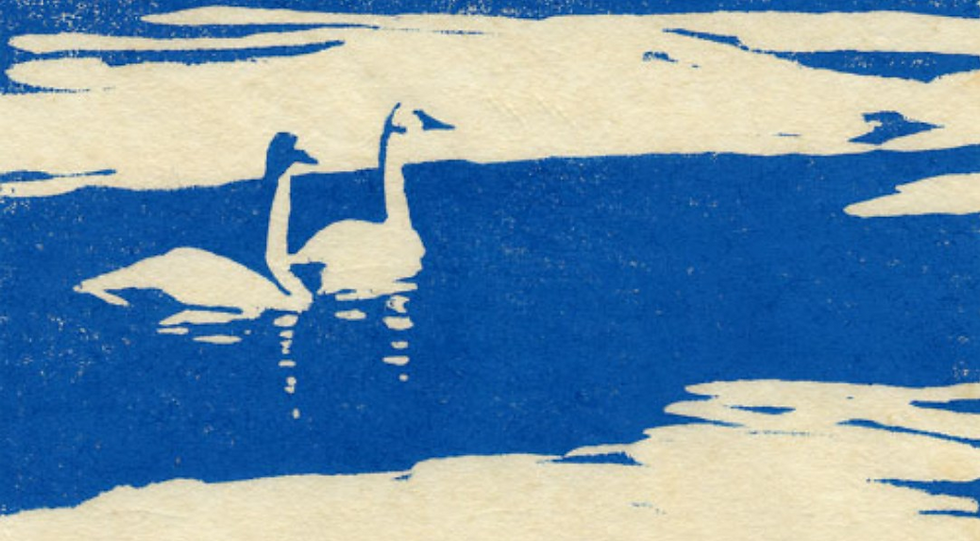
We often impose harsh, restrictive lines on nature. We build concrete buildings, we build fences to keep people (and nature) out. But nature, thankfully, refuses to follow these rules. Flowers push through concrete, squirrels build their homes in attics (something we know all too well at GCH!), birds create their nests in the trees around a weapons factory. Even when we try to control it, nature has a habit of disrupting, of striking a match in the darkness of our world. As I grow more into my new identity as a “birder”, I hope that their song will always be a welcome disruption in a dark, grey world.
Naomi Orrell


